Published on:
Estimated Reading Time: 9 minutes
Written by Jasmina C., Head of Marketing at SDR.sg
Discover real SDR.sg experiences running outbound campaigns in Japan. Learn why meetings stall, how nemawashi and ringi affect pipeline, and best practices for hybrid AI + human SDR teams. Practical tips, failure lessons, and structured follow-ups included.

This is the third and final part of our series on Japanese B2B sales:
- Part 1: Why Standard Sales Pitches Fail in Japan — And What Actually Works
- Part 2: How to Adapt SDR Outreach to Japanese Business Culture
In this installment, we share real SDR.sg team experiences running outbound campaigns in Japan — what actually happens after meetings are booked, why pipeline stalls, and the lessons we learned after dozens of campaigns.
What We Expected vs What Actually Happened
When our team first launched outbound campaigns targeting Japanese companies with outsourced SDR services APAC, we applied the same strategies that had worked across Singapore and other APAC markets:
- Personalised outbound sequences
- Multi-channel outreach (email + LinkedIn + calls)
- Clear value propositions tailored to SaaS/B2B buyers

Early results looked strong:
- Solid reply rates (6–12%)
- Meeting acceptance decent (2–5%)
- Engagement felt good
But the real challenge surfaced after the meetings. Pipeline didn’t move. Conversion stalled.
Table 1: Campaign Expectation vs Reality
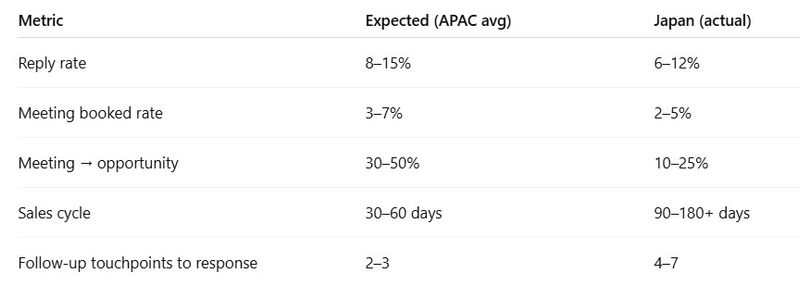
Insight: Even if B2B prospecting APAC markets looks okay on paper, the drop happens after meetings due to nemawashi (pre-lobbying stakeholders) and ringi (circular approvals), which define internal Japanese processes.
How Japanese Meetings Actually Work
Based on over 50–100 campaigns, we saw the same patterns repeatedly:

1. Meetings are polite evaluations, not buying conversations
Expecting: discovery, pain discussion, qualification.
Reality: polite introductions, minimal pushback, few objections.
👉 The meeting’s goal is credibility assessment, not decision-making.
2. Attendees are rarely decision-makers
In most meetings:
- Mid-level managers collect information
- Department leads validate and escalate
- Executives rarely attend early
The ringi process often means approval flows upward in rounds, with multiple stakeholders needing to sign off before any deal moves forward.
Lesson: SDRs must shift from “book demo = next step” to:
“Who needs this deck next?”
“Which department must review our security docs?”
Most stalled deals aren’t rejected — they’re moving slowly through nemawashi and ringi.
3. Language and translators matter
- First meetings are often in English.
- 60–70% of subsequent meetings require a Japanese translator.
This changes the dynamics: scripts, decks, and follow-ups must be concise, clear, and translation-friendly. Idioms or long sentences don’t work.
Our SDRs learned: always prepare follow-ups that translate well, e.g., short sentences, bullet points, clear comparisons.
4. Silence is a signal
Western teams panic at silence. In Japan:
- Silence = thinking
- Silence = processing
- Silence = respect
Over-talking reduces credibility. Learning to sit with silence was one of our most critical lessons.
Table 2: Assumption vs Reality in Meetings
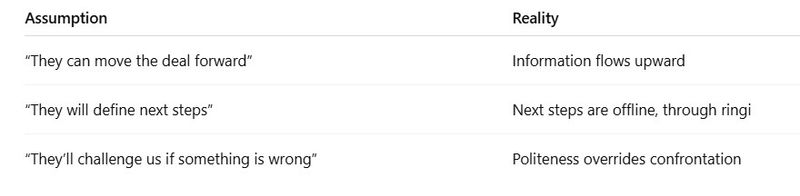
Description:
This table shows why many Western SDR assumptions fail in Japan. The decision-making process is indirect — meetings are primarily for evaluation, not execution. Understanding this helps SDR teams plan next steps correctly, focusing on who internally needs the information rather than expecting immediate action.
5. Structured follow-ups outperform generic ones
Generic check-ins fail. What works is:
Example follow-up (successful in campaigns):
“As discussed, here’s a summary of key points + attachment comparing your current workflow and how our tool can reduce manual tasks by ~30% (based on similar Japanese clients). Please share with relevant colleagues.”
Another example:
“Thank you for the meeting. Key decisions we need visibility on: (1) Security review, (2) Dept. feedback on process comparison. Attached deck optimized for internal circulation.”
Table 3: Follow-Up Performance
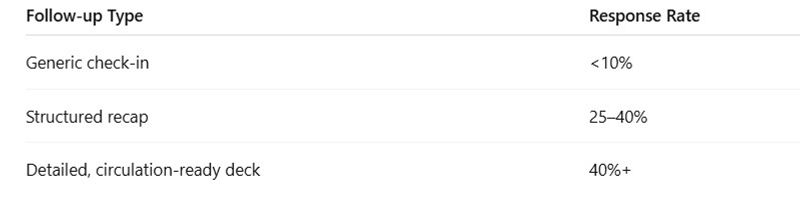
Insight: For email marketing and SDR outreach strategies, structured follow-up is the key to moving deals in Japan.
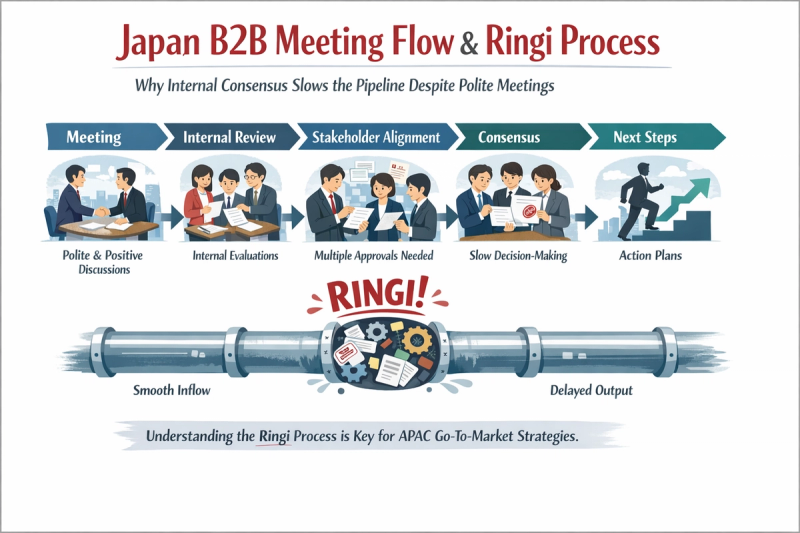
Flow: Meeting → Internal Review → Stakeholder Alignment → Consensus → Next Steps
Description: Shows how internal consensus slows pipeline despite polite meetings. Understanding this is essential for APAC go-to-market strategies.
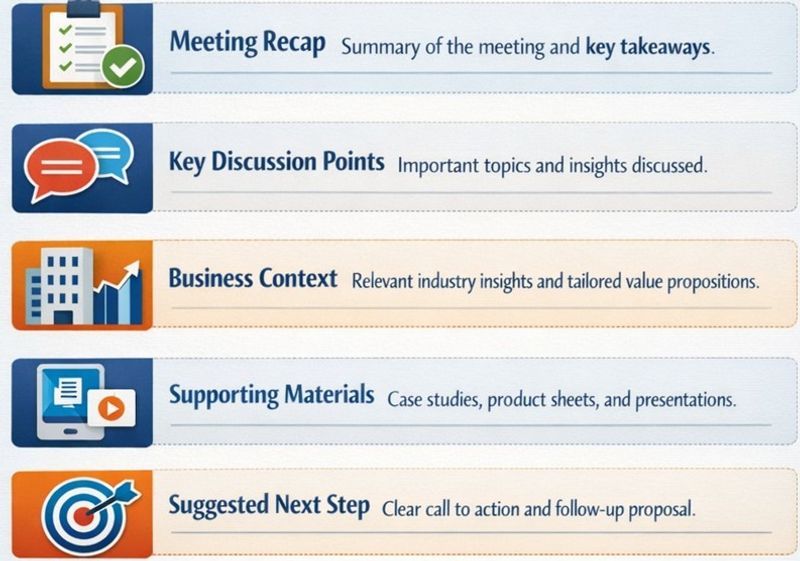
Sections: Meeting recap → Key discussion points → Business context → Supporting materials → Suggested next step
Description: Demonstrates how hybrid AI + human SDRs optimize outreach and follow-ups. AI handles volume, human SDR ensures nuanced communication and credibility-building.
6. Failure stories (what we learned the hard way)
- One month: booked 18 meetings, closed 0.
Mistake: pushed too aggressively on pain points → lost trust.
- Another campaign: early AI-only follow-ups → no engagement.
Solution: hybrid model, senior SDR takes over after first positive reply.
- Follow-up frequency misaligned: initially 2–3 touchpoints → insufficient.
Needed 4–7 touchpoints for response in Japan (vs 2–3 in Singapore).
7. Real campaign adjustment
After failures:
- Reduced outreach volume (~40% less)
- Focused on credibility-building + case studies
- Introduced structured follow-ups and decks for circulation
- Aligned SDR + AE expectations
Result: Fewer meetings, but higher-quality pipeline, first qualified opportunities 6–8 weeks after first meeting.
Internal Links (SDR.sg Context)
This blog builds directly on:
- 👉 Part 1 – Why Standard Sales Pitches Fail in Japan
- 👉 Part 2 – How to Adapt SDR Outreach to Japanese Business Culture
- 👉 B2B Lead Generation in APAC
FAQ – SDR Insights from Japan
Q1: Why do meetings not convert into pipeline?
A1: They’re evaluation steps, not decision points.
Q2: Should we qualify harder on the call?
A2: No — over-qualification can erode trust.
Q3: Why aren’t prospects giving clear feedback?
A3: Japanese communication is indirect; patience is required.
Q4: How long to wait before following up?
A4: 3–7 business days, often 4–7 touchpoints.
Q5: Does AI SDR work in Japan?
A5: Yes — hybrid model works best (AI = volume, human = nuance).
Q6: Is Japan worth the effort?
A6: Yes, with proper expectations and process adaptation.
Q7: What’s the biggest mistake?
A: Applying Western sales logic to Japanese buyers.
Final Takeaways
- Meetings are polite evaluations.
- Pipeline moves through nemawashi and ringi, not meetings.
- Follow-up must be structured and circulation-ready.
- Hybrid AI + human SDR yields best results.
- Failure and iteration are part of the process — credibility matters more than speed.
After 18 months of testing in Japan, these are the lessons that helped us survive and scale — we hope they help your SDR teams too.

If your team wants to:
- Improve B2B lead generation
- Scale pipeline in Japan or broader APAC
- Implement hybrid AI + human SDR outreach
👉 Book a strategy session: HERE
Explore: