Published on:
Estimated Reading Time: 11 minutes
Written by Jasmina C., Head of Marketing at SDR.sg
Learn how to structure cold outreach that resonates with decision makers in Singapore. Discover multi-touch strategies, hybrid AI-human SDR teams, and outsourced SDR services to improve B2B lead generation in APAC.
As we explored in Why Singapore B2B Lead Generation Is Failing, many internal SDR efforts struggle with low response rates, high costs, and slow pipeline growth.
This guide dives deeper into what decision makers actually respond to in cold outreach in Singapore. Understanding this allows companies to structure multi-touch sequences, craft relevant messaging, and leverage hybrid AI-human SDR teams for better lead generation outcomes.
Introduction – Why Most Cold Outreach in Singapore Fails
Decision makers in Singapore receive dozens of cold emails, LinkedIn messages, and calls every week. Most are ignored because they lack context, relevance, or clear business value.
Companies entering the Singapore and broader APAC market often struggle with:
- low response rates
- long SDR ramp-up cycles
- inconsistent sales pipeline growth
To build predictable pipeline generation, outreach must be structured around how executives evaluate opportunities: relevance, efficiency, and clear business outcomes.
This guide explains what actually drives responses from decision makers in Singapore, including multi-touch outreach strategies, hybrid AI-human SDR teams, and outsourced SDR models used by high-performing B2B organizations.

Internal vs Outsourced SDR Teams
Before designing outreach strategies, companies expanding into APAC often evaluate whether to build an internal SDR team or work with an outsourced provider.
Comparing both models helps determine the most efficient path to pipeline growth.
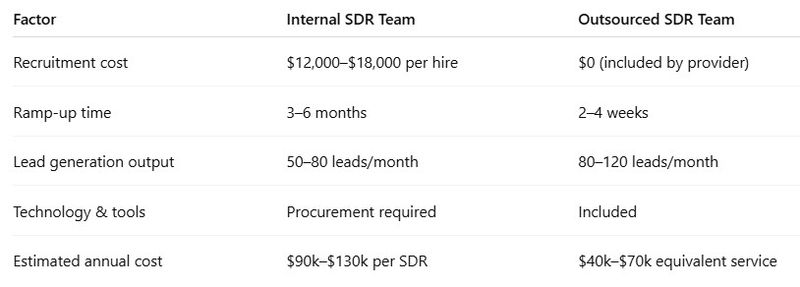
Table explanation:
This comparison highlights one of the primary reasons companies choose outsourced SDR services. Internal teams require significant upfront investment in hiring, onboarding, and technology procurement. Outsourced providers typically include trained SDRs, prospecting tools, and established outreach frameworks, allowing companies to begin generating pipeline much faster.
Messaging That Actually Gets Responses
Decision makers in Singapore tend to respond to outreach that is:
- concise
- context-driven
- focused on business impact
Messages longer than 120–150 words often receive lower reply rates among executives in technology, SaaS, and finance sectors.
Effective outreach focuses on three angles:
- Market expansion challenges
- Operational bottlenecks
- Cost efficiency improvements
Research from Salesloft shows that multi-channel outreach sequences significantly outperform single-channel approaches, particularly when email, LinkedIn, and calls are combined.
Example Cold Outreach Message
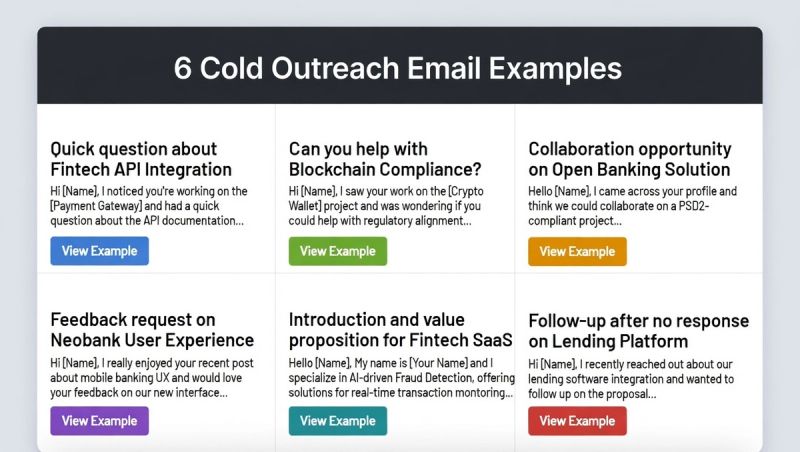
A simple example illustrating how outreach should be structured:
Subject: Reducing SDR ramp-up time for Singapore expansion
Hi [Name],
Many SaaS companies entering Singapore struggle with long SDR ramp-up cycles and inconsistent pipeline growth.
We recently helped an APAC technology firm generate over 100 qualified leads per month using a hybrid outreach model combining AI prospecting with human SDR engagement.
Would you be open to a short discussion on whether a similar approach could support your Singapore market expansion?
Best regards,
[Name]
This structure works because it:
- references a specific business challenge
- provides social proof
- proposes a low-commitment conversation
APAC Multi-Touch Outreach Funnel
High-performing SDR teams rarely rely on a single outreach attempt.
Typical outbound sequences include 5–6 touchpoints across multiple channels.
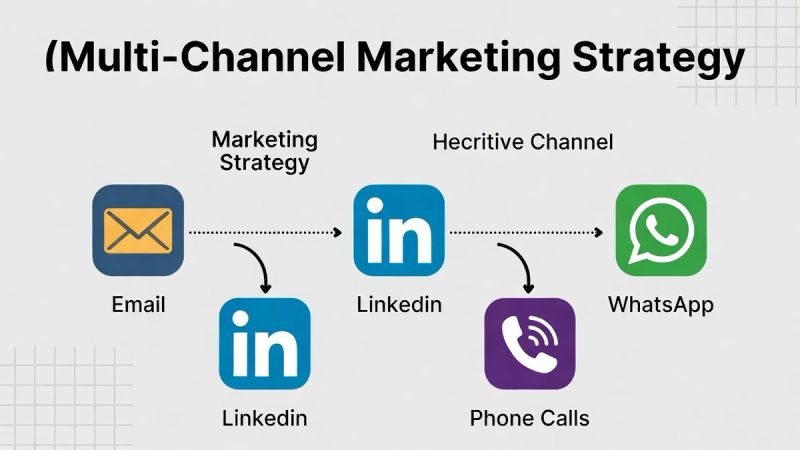
Example cadence:
- Introductory email
- LinkedIn connection request
- Follow-up email
- LinkedIn message
- Phone call
- Final follow-up email
Most meetings are booked between touchpoints 4 and 6, once familiarity and trust begin to develop.
Multi-Touch Outreach Sequence
Visual concept:
A funnel showing the typical outbound engagement journey.
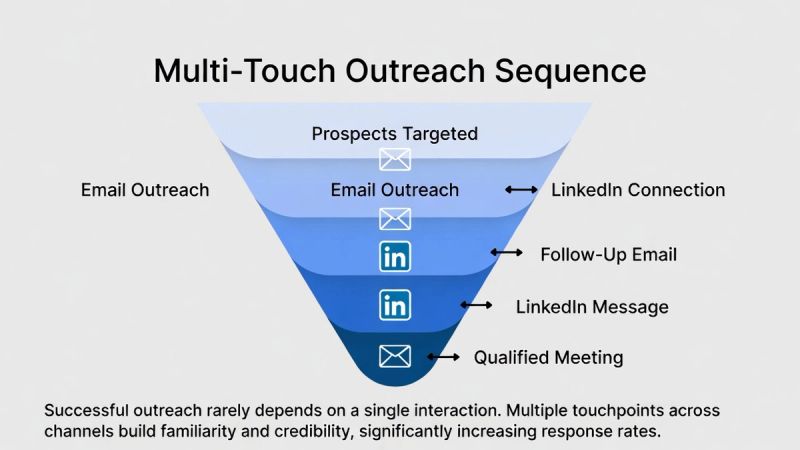
Infographic explanation:
The diagram illustrates how successful outreach rarely depends on a single interaction. Multiple touchpoints across different channels increase familiarity and credibility with decision makers. This layered approach significantly improves the likelihood of generating responses compared to isolated outreach attempts.
Messaging Benchmarks in APAC Outreach
Testing different messaging angles helps identify what resonates most with executives.
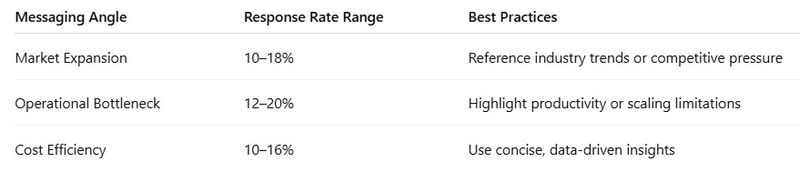
Table explanation:
Different messaging angles appeal to different executive priorities. Operational challenges tend to generate stronger engagement because they connect directly to productivity and growth constraints. Messages focused purely on product features typically receive lower reply rates.
Leveraging Hybrid AI-Human SDR Teams
Many companies now use hybrid teams that combine AI prospecting with human SDR outreach.
Research from McKinsey & Company indicates that AI-enabled sales teams can significantly improve lead qualification and productivity when integrated into existing workflows.
Hybrid SDR Workflow
- AI identifies high-intent accounts
- Prospects are scored using firmographic and behavioral data
- SDRs personalize outreach messages
- Multi-channel sequences are executed
- SDRs qualify interested prospects and schedule meetings
Hybrid SDR Model
Visual concept: AI-assisted outbound workflow.
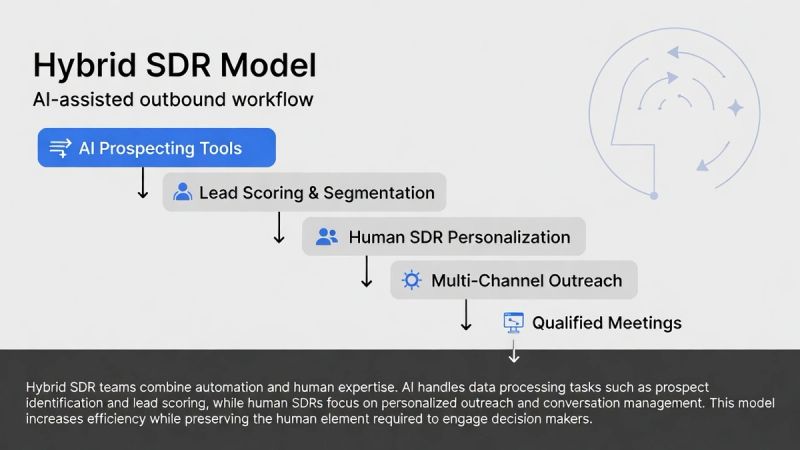
Infographic explanation:
Hybrid SDR teams combine automation and human expertise. AI handles data processing tasks such as prospect identification and lead scoring, while human SDRs focus on personalized outreach and conversation management. This model increases efficiency while preserving the human element required to engage decision makers.
Case Example – Fintech Expansion into Singapore
A fintech software provider entering Singapore faced two challenges:
- slow internal SDR hiring
- low response rates from generic outreach campaigns
After implementing a structured multi-touch sequence and outsourced SDR support:
- outreach targeted 600 accounts in Singapore
- response rate increased to 11%
- 23 qualified meetings were booked within 6 weeks
The key improvements came from:
- localized messaging
- multi-channel outreach
- faster SDR deployment
Key SDR KPIs for APAC Outbound Programs
Tracking performance metrics helps ensure outreach campaigns generate consistent results.
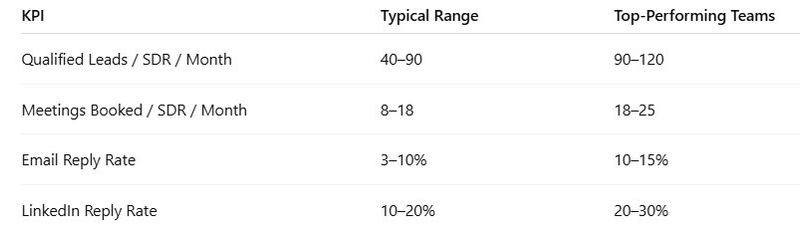
Table explanation:
These benchmarks represent typical performance ranges observed in B2B outbound programs across APAC markets. While results vary by industry and targeting strategy, the metrics provide a useful framework for evaluating SDR performance and identifying opportunities for outreach optimization. ( Artemis Leads, SendIQ )
Industry Insights
Several consistent trends appear in modern B2B outreach:
- executives increasingly ignore generic outreach messages (HubSpot)
- multi-channel sequences outperform single-channel strategies
- AI-assisted prospecting improves SDR productivity when combined with human outreach (HubSpot)
Many B2B organizations now explore outsourced SDR services to accelerate pipeline development while avoiding the cost and complexity of building internal outbound teams.
Outsourced SDR and hybrid AI-human models have been widely adopted by global B2B lead generation and sales acceleration providers.
FAQ – Outsourced SDR Singapore
Q1: What is the difference between internal and outsourced SDR teams?
A1: Internal teams require recruitment, onboarding, and sales infrastructure.
Outsourced teams provide trained SDRs, technology, and outreach systems.
Q2: How fast can outsourced SDR teams generate leads?
A2: Most providers begin generating pipeline activity within 2–4 weeks.
Q3: Can AI replace human SDRs?
A3: No. AI supports prospect identification and automation, while human SDRs manage conversations and qualification.
Q4:Which industries benefit most from outsourced SDR services in APAC?
A4: Common sectors include:
- SaaS
- enterprise technology
- financial services
- healthcare technology
Q5: How should SDR performance be measured?
A5: Key metrics include:
- qualified leads generated
- meetings booked
- reply rates
- pipeline contribution

Accelerate your Singapore and APAC market expansion with expert SDR support. Partner with SDR.sg to:
- Scale your outsourced SDR team quickly
- Implement multi-touch, hybrid AI-human outreach
- Generate qualified meetings with key decision makers
Schedule a consultation today: HERE
"Discover how a structured outbound approach can build a predictable pipeline without the cost of hiring internal SDRs."
Next Article
In the next article we will examine a real-world example:
How Cold Fintech Leads Were Converted into Meetings in Singapore, including the exact outreach strategy used to generate qualified opportunities.