Published on:
Estimated Reading Time: 9 minutes
Written by Jasmina C., Head of Marketing at SDR.sg
Discover how to build a high-performing B2B sales pipeline in APAC. Learn the 5-stage pipeline, key rules, AI & human SDR strategies, and tips to book more sales meetings.
Most B2B sales pipelines look busy on paper.
Deals everywhere. Meetings booked. Activity ticking along.
And yet, revenue stays inconsistent.
In APAC, this happens more often than teams like to admit. Long buying cycles, multiple decision-makers, cultural nuances, and misaligned SDR efforts turn even “full” pipelines into leaky ones.
At SDR.sg, we work with B2B and SMB teams across APAC to fix exactly that. Not by adding more tools or more leads, but by building clear, realistic sales pipelines powered by outsourced sales development for SMBs, AI-powered sales prospecting tools, and strong human judgment.
This guide breaks down the most common questions people ask about sales pipelines, and explains what actually works in APAC.
What Is a Sales Pipeline (Really)?
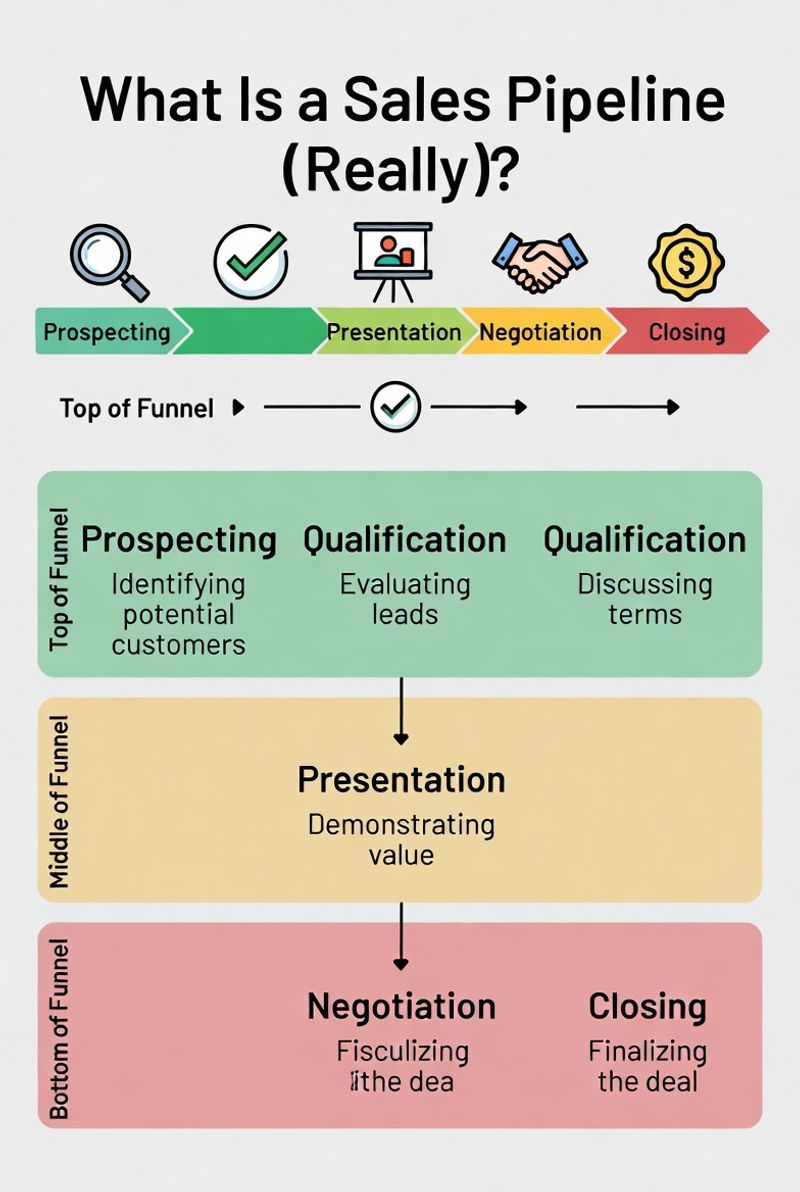
A sales pipeline is not just a CRM view or a list of deals.
It’s a decision framework.
It shows:
- where prospects are actually stuck,
- which deals are real and which are noise,
- and what your team should focus on next.
In APAC B2B sales, where APAC sales expansion services and APAC go-to-market strategies are critical, a well-designed sales pipeline is often the difference between growth and frustration.
What Are the Stages in a Sales Pipeline?
If you search online, you’ll see dozens of answers. That’s because there is no single “correct” sales pipeline.
Most B2B teams use 3, 4, 5, or 7 stages, depending on deal size and complexity.
What matters isn’t the number, it’s whether each stage forces a real decision.
📊 Sales Pipeline Models Compared
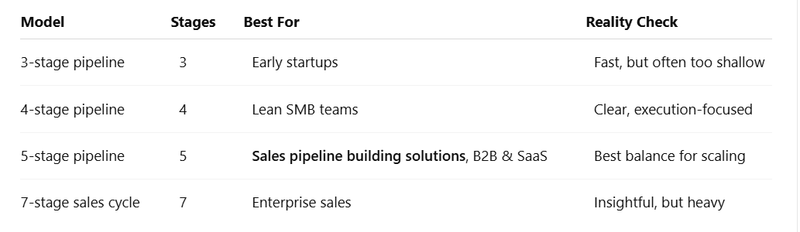
This table highlights four common sales pipeline models. Smaller teams often choose 3- or 4-stage pipelines for speed and simplicity, while larger B2B or SaaS teams prefer 5 or 7 stages for better control over lead qualification and deal tracking. The choice depends on resources, product complexity, and target APAC markets.
What Are the 5 Stages of the Sales Pipeline?
This is the most searched question, and for good reason. The 5-stage pipeline works for most B2B teams because it adds structure without slowing things down.
It also aligns with what people mean when they ask: “What is the 5 steps sales process?”
The 5 stages explained
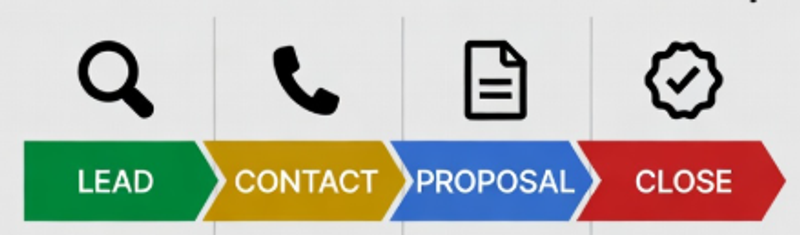
1. Prospecting / Lead Generation
Finding the right companies, not just more companies. Outbound, email marketing, LinkedIn, and AI-powered sales prospecting for B2B all help, but relevance matters more than volume.
2.Qualification
This is where most sales pipelines fail. If SDRs qualify too loosely, sales wastes time later. Strong lead qualification tips for B2B companies, often supported by AI but led by humans, keeps the pipeline honest.
3.Discovery / Presentation
Understanding the problem before selling the solution. In APAC, this often takes longer and involves more stakeholders. Use appointment setting tips APAC to keep momentum.
4.Negotiation
Clarifying scope, pricing, and internal alignment. Momentum matters here, this is where deals quietly die.
5.Closing
Agreement, onboarding, and handover. A clean close usually reflects a clean sales pipeline.
This structure works especially well when paired with outsourced SDR services Singapore or hybrid sales team AI and human solutions that focus purely on pipeline quality, not just activity.
Sales Pipeline vs. Sales Cycle
These two terms are often mixed up.
- The sales pipeline shows how your team moves deals forward.
- The sales cycle reflects how buyers make decisions.
Understanding both is critical, especially for outbound.
👉 For a deeper outbound breakdown, see:
The 5 Types of Sales: A Deep Dive Into Outbound for APAC Growth
📊 5-Stage Pipeline vs. 7-Stage Sales Cycle
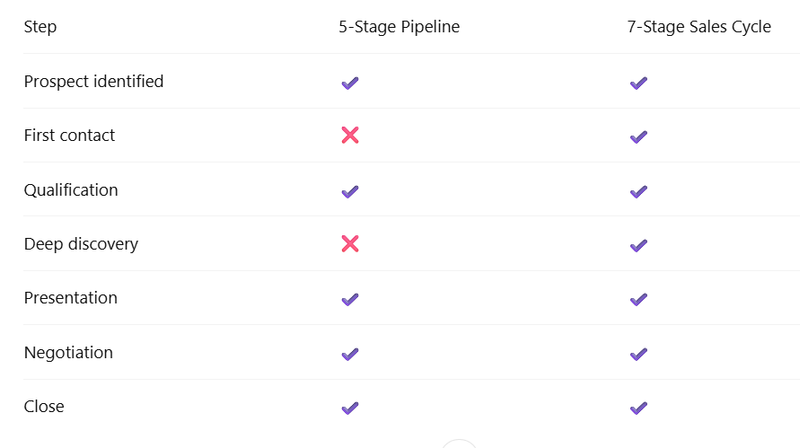
This table shows the difference between a simpler 5-stage pipeline and a detailed 7-stage sales cycle. A smaller pipeline is suitable for agile teams, while the larger sales cycle helps navigate complex APAC B2B deals with multiple touchpoints. Combining B2B lead generation strategies APAC, outbound lead generation strategies, and AI-powered sales prospecting tools enhances results.
What Are the 4 Pipeline Stages?
Some teams simplify things intentionally. A 4-stage pipeline usually includes:
- Lead generation
- Lead nurturing
- Opportunity development
- Closing
This simplified sales pipeline works well when resources are limited or the APAC go-to-market strategies for startups are being tested. Each stage is designed to provide clarity and focus, important for both human readers and search engines.
What Is a 3-Stage Pipeline?
The simplest version:
- Prospecting
- Evaluation
- Decision
While fast and easy to implement, the 3-stage pipeline often hides problems. Many B2B lead generation companies in APAC outgrow it quickly when deal sizes and complexity increase.
Sales Rules That Actually Help (and How to Use Them)
Sales rules aren’t laws, they’re guidelines.
Used correctly, they bring discipline. Used blindly, they create false confidence.
For example, the 3-3-3 rule is often misunderstood. When applied thoughtfully, it helps SDRs personalize outreach instead of sending generic messages.
👉 Full breakdown here:
How the 3-3-3 Rule Boosts Outbound Sales Success in APAC
📊 Common Sales Frameworks (At a Glance)
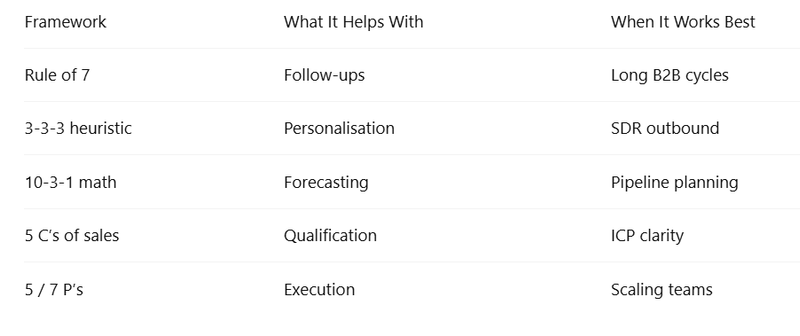
This table summarizes key sales principles and frameworks that help B2B teams in APAC maintain discipline. Each principle is contextualized, explaining when and how to use it, making the content rich for Google and valuable for readers.
Real APAC Case Studies / Results
- Singapore SaaS Client: Using AI SDR and outsourced sales development for SMBs, the team increased qualified meetings by 30% within 3 months.
- Mid-Market APAC Company: Hybrid human + AI SDR team improved conversion rates by 25%, optimizing sales pipeline building for B2B companies.
Adding real numbers and outcomes builds credibility, demonstrating that these strategies work in practice and giving Google richer content signals.
Why Sales Pipelines Break in APAC
From what we see, pipelines fail when teams:
- scale outbound before defining their ICP,
- rely too heavily on automation,
- reuse US/EU messaging without localization,
- or separate SDR activity from sales outcomes.
👉 A deeper look at this problem:
Why Scaling Too Early Breaks Your Sales Pipeline in APAC
How SDR.sg Helps Teams Build Pipelines That Convert
We don’t just generate leads. We help teams build pipelines that sales can trust.
Our approach combines:
- Outsourced SDR services Singapore and APAC,
- Hybrid sales teams: AI and human SDR,
- AI-powered sales prospecting tools,
- strong lead qualification tips for B2B companies,
- clear handoff between SDR outreach strategies and sales.
The result:
- fewer wasted meetings,
- better deal visibility,
- more predictable revenue.
For a broader perspective, see:
Lessons From SaaS: What E-Commerce Can Learn About Building Predictable Sales Pipelines
Add a 5-stage sales pipeline diagram with AI/SDR overlay:
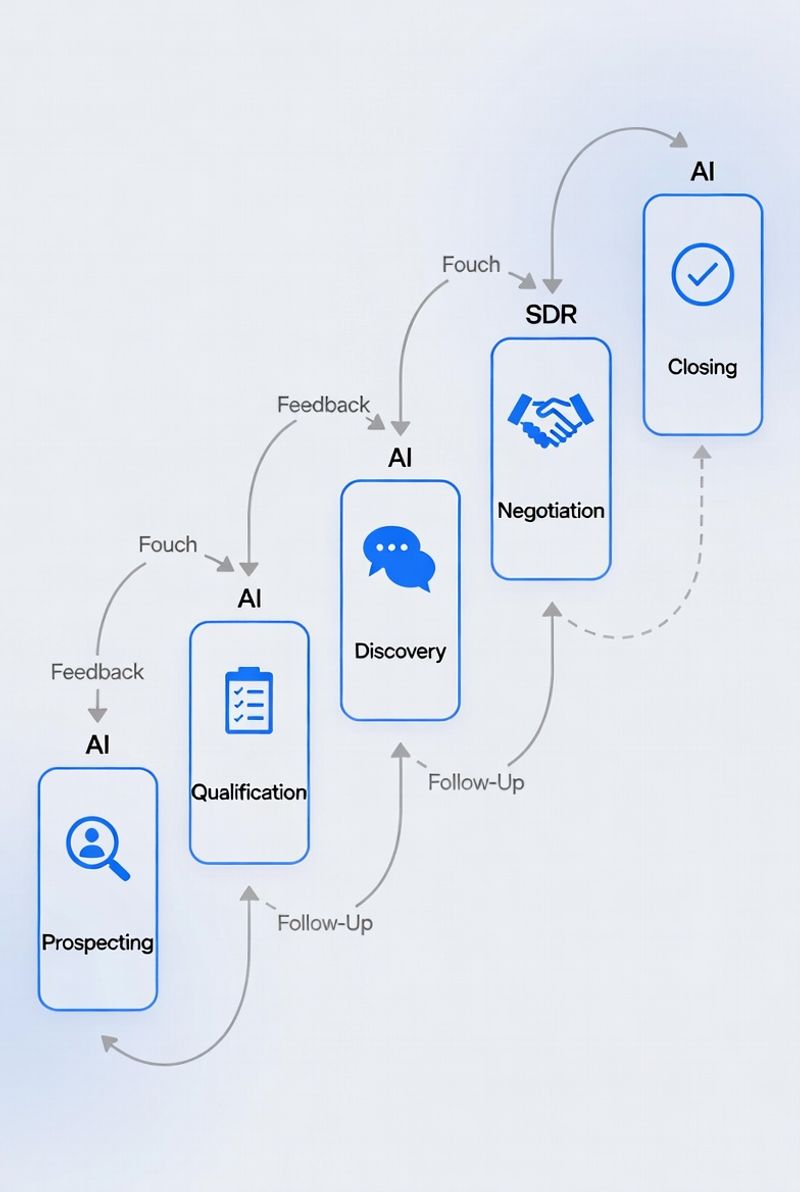
This diagram shows a 5-stage B2B sales pipeline with AI and human SDR roles. Arrows indicate feedback loops and follow-ups, helping APAC B2B teams see how leads move efficiently through Prospecting, Qualification, Discovery, Negotiation, and Closing.
Final Thought
A good sales pipeline doesn’t feel busy.
It feels clear.
If your pipeline is full but revenue is unpredictable, the issue isn’t lead volume, it’s structure, qualification, and execution.
SDR.sg helps B2B teams across APAC build sales pipelines that actually move deals forward. Contact us today to schedule a Sales Pipeline Audit.