Published on:
Estimated Reading Time: 10 minutes
Written by Jasmina C., Head of Marketing at SDR.sg
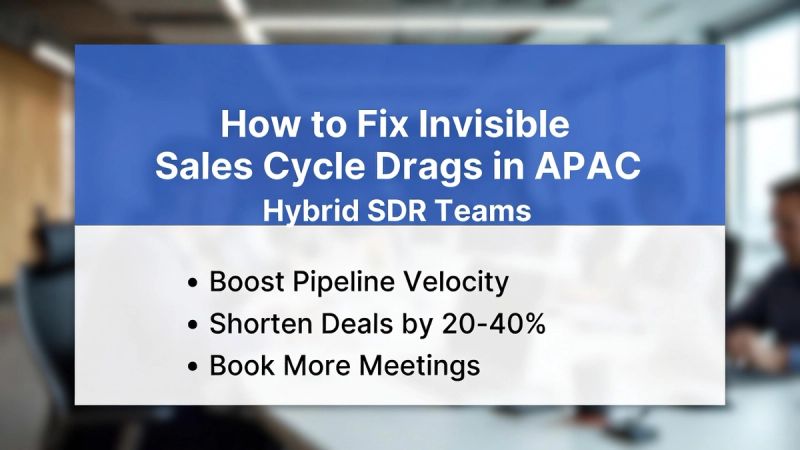
Learn how to fix invisible sales cycle drags in APAC with hybrid SDR teams. Boost pipeline velocity, shorten deals 20–40%, and book more meetings.
Many APAC sales teams have the same problem: the pipeline looks full, activity is high, but revenue moves slowly.
Meetings happen. Opportunities are created.
Then deals sit in the same stage for weeks.
These are invisible sales cycle drags — hidden delays that slow deal progression, reduce win rates, and waste SDR effort.
If your company is investing in B2B lead generation in APAC, Sales pipeline building solutions, or scaling Outsourced SDR services Singapore, fixing pipeline friction often drives faster growth than simply generating more leads.

What Are Invisible Sales Cycle Drags?
Invisible drags are delays that don’t appear as clear “lost reasons” in CRM but slow pipeline velocity and overall deal progression.
Common symptoms:
- Opportunities stuck in the same stage for 2–4 weeks
- High meeting volume but low conversion
- Long gaps between interactions
- Forecasts repeatedly pushed
According to Gartner, the typical B2B buying group now includes 6–10 stakeholders, significantly increasing internal coordination time.
Data from the 6sense Buyer Experience Report shows the average B2B sales cycle now exceeds 10–11 months globally, with APAC often longer due to consensus-based decision-making.
Where Deals Stall in APAC
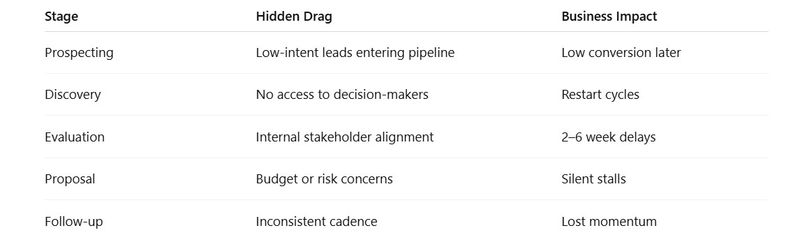
Table 1: Common Pipeline Bottlenecks
Description:
Most delays begin early. When qualification is weak, research-stage prospects enter the pipeline, slowing pipeline velocity and reducing the effectiveness of B2B lead generation in Asia.
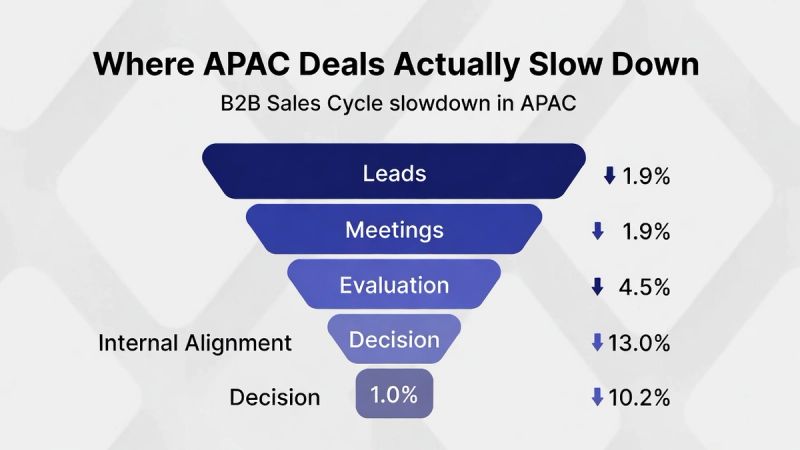
Where APAC Deals Actually Slow Down
Description:
The biggest delays occur after the first meeting, during evaluation and internal discussions. Insights from Gong show that middle-funnel stages carry the highest risk for stalled or lost deals in complex B2B sales.
The Hidden Causes of Slow Sales Cycles
1. Low Buying Intent
Website visits or content downloads don’t equal readiness. Without intent signals, SDRs spend time on early-stage prospects.
Companies using intent data see up to 30% higher conversion rates, based on benchmarks from Forrester.
Relevant for:
2. Single-Threaded Engagement
If only one contact is involved, internal conversations happen without you. When new stakeholders enter later, the process resets.
3. Slow Follow-Up
In APAC markets, speed signals priority. Delayed responses reduce momentum and buyer interest.
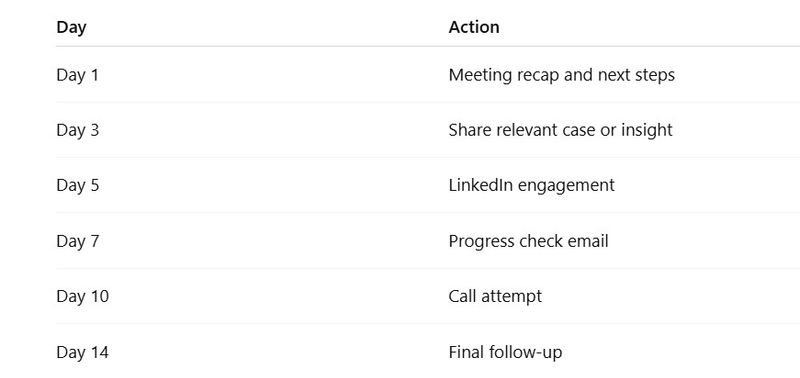
Table 2: High-Impact SDR Follow-Up Cadence
Description:
A structured cadence keeps opportunities active and improves engagement without overwhelming prospects. Consistency is critical for effective Email marketing and SDR outreach strategies.
4. Internal Risk and Budget Delays
APAC buyers prioritize stability, ROI clarity, and risk reduction. Lack of proof or unclear business impact slows internal approval.
5. Poor Pipeline Prioritization
When SDRs treat all leads equally, high-intent accounts don’t receive timely attention, slowing overall deal progression.
How Hybrid SDR Improves Pipeline Velocity
High-performing teams combine AI prioritization with human outreach. This supports:
- Hybrid sales team AI and human
- Outbound lead generation strategies
- Increase sales meetings with outsourced SDR
- Scaling SDR teams in Asia
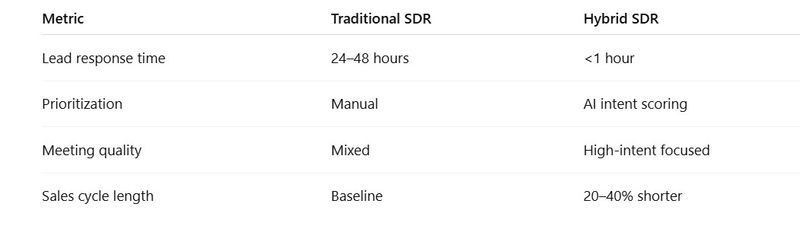
Table 3: Traditional vs Hybrid SDR Performance
Description:
Faster response and AI-driven prioritization significantly improve pipeline velocity and reduce sales cycle length, especially for companies executing APAC go-to-market strategies for startups.
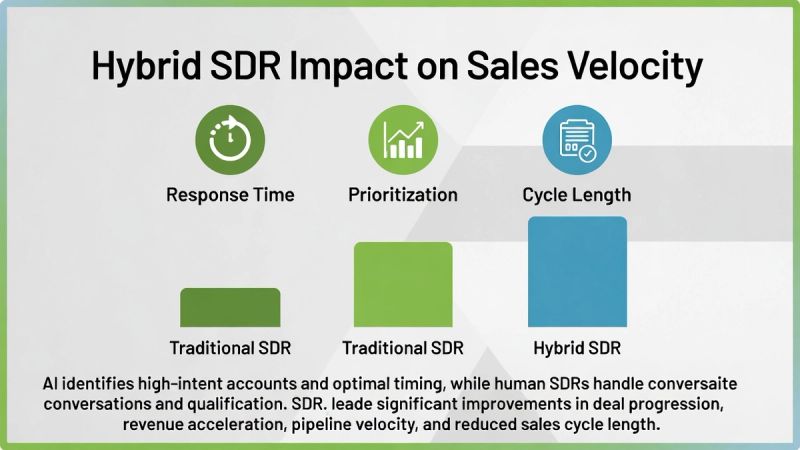
Hybrid SDR Impact on Sales Velocity
Description:
AI identifies high-intent accounts and optimal timing, while human SDRs manage conversations and qualification. This hybrid model improves deal progression and accelerates revenue.
Practical Fixes to Reduce Sales Cycle Length
1. Qualify Earlier
Use structured frameworks such as BANT or MEDDICC at the SDR stage. Early disqualification protects pipeline quality.
Supports:
- Lead qualification tips for B2B companies
- Top challenges in B2B lead generation
2. Combine Inbound and Outbound Signals
Inbound shows interest. Outbound confirms urgency.
Best results come from combining both approaches.
Related: How to combine inbound and outbound leads
3. Measure Pipeline Velocity
Track:
- Stage duration
- Time between interactions
- Days to decision
If any stage exceeds 14–21 days, hidden friction is likely.
4. Use Outsourced SDR for Consistency
Many teams accelerate growth with:
- Outsourced sales development for SMBs
- Lead generation agency
- B2B lead generation Singapore
- Outsourcing SDR in Singapore
External SDR teams provide faster ramp time, consistent execution, and local market expertise.

Quick Case Example
A SaaS company expanding into Southeast Asia generated strong lead volume but experienced evaluation stages lasting over 90 days.
After implementing a hybrid SDR model:
- Lead response time dropped to under one hour
- Buying committees were mapped early
- Multi-thread outreach increased stakeholder engagement
Result: Sales cycle reduced by 32% and meeting-to-opportunity conversion improved.
Related Insights
- B2B lead prioritization strategies
- Why deals stall after the first meeting
- Scaling SDR teams in Asia
FAQ: B2B sales cycles longer in APAC
Q1. Why are B2B sales cycles longer in APAC?
A1: Consensus decision-making and multiple stakeholders extend evaluation timelines.
Q2. What is the main cause of stalled deals?
A2: Low-intent prospects entering the pipeline too early.
Q3. How many follow-ups should SDRs send?
A3: Typically 5–7 touches over two weeks across multiple channels.
Q4. Can AI shorten sales cycles?
A4: Yes. Intent scoring and prioritization improve pipeline velocity and reduce delays.
Q5. When should a company outsource SDR?
A5: When internal teams struggle with consistency, scale, or entering new markets.
Q6. What metric matters most for pipeline health?
A6: Pipeline velocity — how fast deals move through stages.
Q7. How do hybrid SDR teams work?
A7: AI identifies high-intent accounts and timing, while human SDRs handle conversations and qualification.
If your pipeline is active but deals aren’t moving, the issue isn’t volume — it’s hidden friction.
SDR.sg helps companies:
- Identify pipeline bottlenecks
- Improve B2B lead generation in APAC
- Deploy AI SDR with human expertise
- Book more sales meetings APAC with qualified buyers
Next step:
Schedule a strategy session → HERE
Or explore our Outsourced SDR services Singapore to accelerate your pipeline.