Published on:
Estimated Reading Time: 12 minutes
Written by Jasmina C., Head of Marketing at SDR.sg
👉 Book a strategy session: HERE
👉 Explore services: HERE
Learn how to keep APAC buyer conversations moving across email, LinkedIn, calls, and chat without losing context, momentum, or handover quality. See what strong multi-channel outreach looks like in practice.
In our previous article, we explored where APAC buyer conversations move after the first touch. The next challenge is operational: how do you keep that conversation visible and moving when it spans multiple channels?

Strong APAC sales development services do not fail because teams lack channels. They fail because teams lose context between channels. A buyer replies on LinkedIn, asks for details by email, goes quiet for a week, then responds to a WhatsApp follow-up. Another stakeholder joins later by email. A country manager says “circle back next quarter” on a call, but that note never makes it into CRM. From the outside, activity looks healthy. Inside the workflow, the thread is broken.
That is the real operational challenge in multi-channel outbound sales APAC. The problem is not using email, LinkedIn, WhatsApp, calls, or local messaging tools. The problem is making sure each interaction builds on the last one instead of restarting the conversation from scratch. When that does not happen, the team becomes busy, but the pipeline becomes messy.
This matters even more now because the buying environment is more fragmented and more self-directed than before. 6sense reported that 94% of buying groups rank their shortlist before first vendor contact, while Green Hat and 6sense found that APAC buying groups average 10.9 people and usually engage sellers at around 60% of the journey. That means by the time a team sees a visible signal, the account context is already more complex than one thread or one contact.
It also matters because sellers do not have unlimited time to reconstruct context manually. Salesforce says reps spend only 30% of their time actually selling, while administrative work, internal coordination, and data handling consume the rest. In a multi-country APAC motion, every missing note, uncaptured channel shift, or unclear handover increases that drag.
This article explains how SDR.sg handles that challenge. Not by forcing every buyer into one platform, and not by pretending all channels are equal, but by running a disciplined operating model for sales pipeline building for B2B companies across countries, channels, and handover points. As we argued in The Dark Social Map of APAC, the real issue is not just where conversations move. It is whether your system can follow them.
Why multi-channel outreach breaks without a system
Many teams think they have a channel problem when they actually have a workflow problem. They add LinkedIn because email reply rates are weak. Then they add WhatsApp because follow-up feels too slow. Then they add cold calls because they want more direct access. Soon the team is active everywhere, but nobody is fully sure what happened, who said what, or what the next best move is.

That is where fragmented execution starts killing momentum. Gartner warned in late 2024 that sales and marketing silos create fragmented customer insights and dysfunction that hurts commercial performance. In outbound, the same logic applies one level deeper: channel silos create fragmented account context.
Before the first table, the key idea is simple: more channels do not automatically create better pipeline. Better orchestration does.
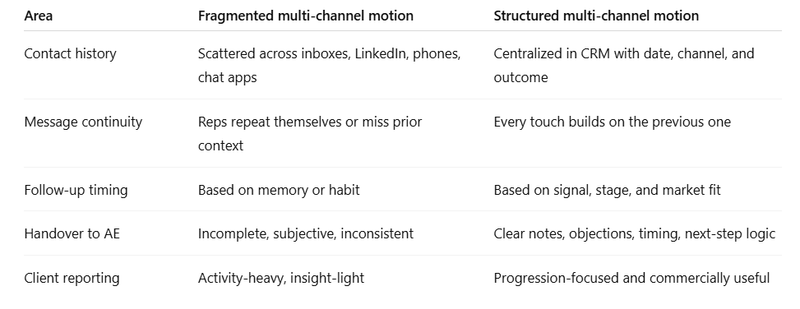
Table 1. What a fragmented outreach motion looks like vs a structured one
Description:
This table shows why many outsourced SDR services APAC underperform even when activity looks high. The problem is not effort. It is that account context gets fragmented across tools and people, making follow-up weaker and handovers less useful.
That is why SDR.sg treats channel coordination as an operating discipline, not a channel checklist. In earlier SDR.sg content, the team showed that a structured 21-day sequence across LinkedIn, email, and cold calls generated 94 booked meetings in 90 days for a SaaS client in Singapore and Indonesia. The sequence worked not because it used three channels, but because timing, role, and progression were tightly controlled.
The SDR.sg rule: every conversation must become visible
The simplest way to explain SDR.sg’s system is this: if a buyer signal is real, it must become visible. Not just to the individual rep, but to the workflow.
That means a WhatsApp response cannot remain in one person’s phone. A LinkedIn exchange cannot remain a vague memory. A call outcome cannot live only in a rep’s notebook. Every meaningful interaction must become structured context: what happened, what changed, who is involved, what matters next, and when the account should move again.

This is where many best practices for multi-channel outbound sales fail in execution. Teams agree in theory that CRM matters. Then speed takes over, reps move fast, and the “real story” stays trapped in private notes or personal judgment. Once that happens, reporting gets distorted and handover quality drops.
Before the second table, here is the principle SDR.sg follows: not every message deserves a CRM entry, but every commercially meaningful signal does.
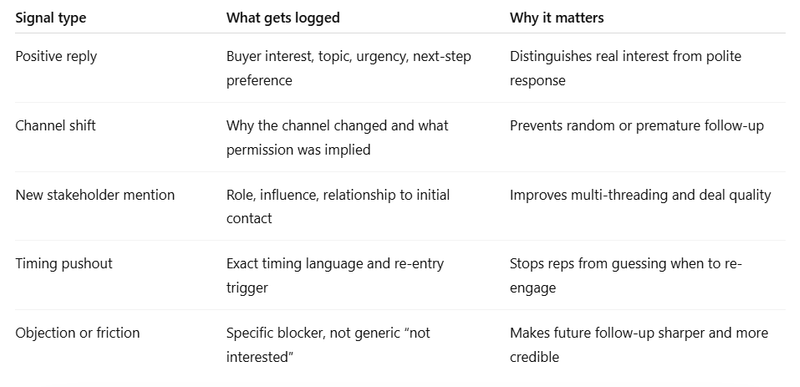
Table 2. What SDR.sg captures after a meaningful buyer interaction
Description:
This table reflects the difference between generic activity logging and usable pipeline intelligence. Strong APAC sales development services do not just record contact attempts. They record what changed inside the account after the interaction.
That distinction becomes more valuable in APAC because the same visible response can mean different things by market. A soft response in Japan may require patient continuation. A quick mobile exchange in Singapore or Indonesia may justify faster follow-up. A warm but non-committal signal in South Korea may mean trust is growing, even if a meeting is not ready yet. SDR.sg’s earlier article on channel mix in APAC makes exactly that point: channels work best when each is assigned a role and used with local context in mind.
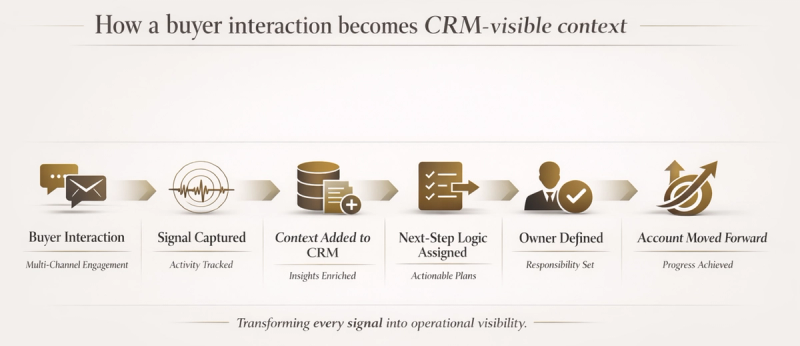
Infographic 1. How a buyer interaction becomes CRM-visible context
Description:
This infographic should show a simple flow: buyer interaction → signal captured → context added to CRM → next-step logic assigned → owner defined → account moved forward. The point is to show that the value of multi-channel execution comes from making every meaningful signal operationally visible, not just personally remembered.
How SDR.sg handles handovers without losing momentum
A lot of pipeline value is lost at handover. The SDR books the meeting, then the AE enters with only partial context. The AE asks questions the buyer has already answered. The buyer has to repeat timing, pain points, or internal politics. Momentum drops, not because the opportunity is bad, but because the transition is clumsy.
That is why SDR.sg treats handover as part of the same motion, not as a separate administrative event. The SDR is not just passing a calendar invite. They are passing a conversation history, a signal interpretation, and a recommended path for the next interaction.
Before the third table, this is the standard that matters: a good handover reduces buyer repetition and increases meeting readiness.
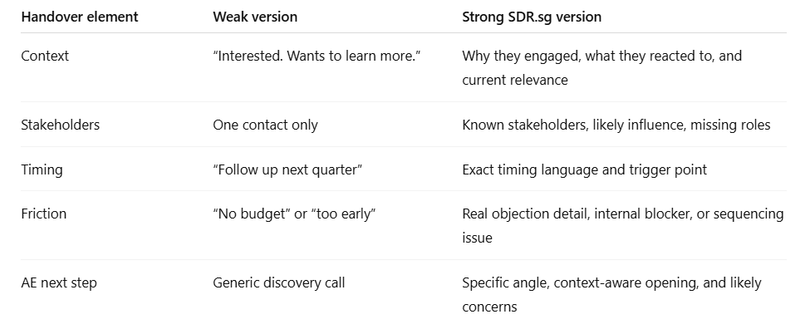
Table 3. Weak handover vs strong SDR-to-AE handover
Description:
This table shows why handover quality is a revenue issue, not a documentation issue. Better sales pipeline building for B2B companies depends on whether the next person can continue the conversation naturally without forcing the buyer to start over.
There is also a speed dimension here. HubSpot’s 2026 sales statistics roundup notes that 80% of successful sales require five or more follow-ups, but 44% of salespeople give up after just one. In a fragmented motion, even when teams do follow up, they often do it with weak memory and weak context. In a structured motion, persistence becomes smarter because each follow-up carries forward actual account intelligence.
SDR.sg’s published benchmark content supports that logic. In one earlier underperforming APAC campaign, 1,500 emails generated only 41 replies and 6 meetings. In later, more structured, localized sequences, SDR.sg benchmarked stronger motions at 35 to 45% opens, 8 to 12% replies, and 4 to 6% meetings booked. Again, the lesson is not that more channels always win. It is that well-structured, well-documented multi-channel motion converts better than scattered activity.
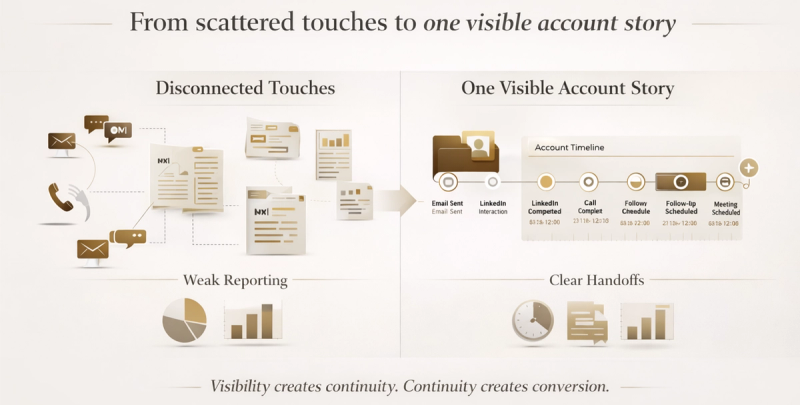
Infographic 2. From scattered touches to one visible account story
Description:
This infographic should contrast two approaches. On one side, disconnected touches across email, LinkedIn, calls, and chat apps with weak reporting. On the other, one visible account story where every meaningful interaction is captured, timed, and handed over clearly. The point is that visibility creates continuity, and continuity creates conversion.
What clients should actually see in reporting
A client should never be forced to guess whether a busy SDR motion is commercially healthy. Good reporting should show what happened, what changed, and what that means.
That means reporting in a way that reflects progression, not just effort. SDR.sg’s own article on true SDR metrics in APAC makes this point clearly: meetings booked matter, but so do opportunity conversion, pipeline contribution, and sales-cycle movement. A dashboard that only shows emails sent and replies received is still too shallow for real APAC go-to-market strategy execution.

In practical terms, clients should be able to see:
- which channels are creating real movement,
- which markets respond to which sequencing logic,
- where deals are slowing down after first engagement,
- how many accounts are becoming multi-threaded,
- and whether handovers are creating qualified momentum or just calendar volume.
That is the difference between generic outbound sales in APAC markets and a managed SDR system that actually learns.
FAQ, common reader questions
Q1. Why is multi-channel outreach harder in APAC than in one domestic market?
Because you are not just adding channels. You are adding different buyer expectations, response rhythms, market norms, and handover risks across multiple countries at once.
Q2. Does every interaction need to be logged in CRM?
No. But every commercially meaningful interaction should be. The goal is not admin for admin’s sake. The goal is visibility for the next best move.
Q3. What is the biggest mistake teams make in multi-channel outbound?
Treating channels as separate tasks instead of one shared account story. That is when context gets lost and handovers weaken.
Q4. How does SDR.sg decide when to shift channels?
Only after a credible signal exists. Relevance first, permission second, then channel fit.
Q5. Why does handover quality matter so much?
Because buyers lose trust when they have to repeat themselves. A weak handover turns a warm conversation into a colder meeting.
Q6. What should clients look for in reporting?
Not just activity totals. They should look for progression, stakeholder expansion, stage movement, and quality of next steps.
Q7. Is this mainly relevant for enterprise deals?
It is most visible there because buying groups are larger and cycles are longer, but the same workflow logic helps any B2B team running multi-market outbound.
Final takeaway
The real challenge in APAC sales development services is not choosing more channels. It is keeping one visible, usable account story as conversations move across channels, people, and time. Without that, even strong outreach can turn into fragmented activity. With it, a team can follow signal properly, hand over cleanly, and build stronger pipeline quality across markets.
That is why SDR.sg runs multi-channel outreach as a system, not a channel stack. One conversation. One account story. Multiple channels, but no lost thread.

If your outbound motion spans multiple APAC markets but your team still relies on inbox memory, scattered notes, or patchy handovers, the issue may not be channel mix. It may be workflow design.
SDR.sg helps B2B teams build multi-channel outbound sales APAC systems that keep buyer signals visible, handovers clean, and reporting commercially useful. A practical next step is to review your current process across five points: channel usage, signal capture, CRM visibility, handover quality, and reporting depth.
That kind of audit usually shows very quickly whether your SDR motion is truly coordinated, or only looks active on the surface.