Published on:
Estimated Reading Time: 13 minutes
Written by Jasmina C., Head of Marketing at SDR.sg
Discover how Malaysian B2B buyers make decisions before your first call. Learn proven B2B lead generation Malaysia tactics, pre-call trust signals, and APAC outbound strategies to increase show-up rates.

Introduction – The Decision Happens Before the Meeting (Part 2)
This article builds directly on our previous analysis:
Why Most B2B Deals in Malaysia See Early Pipeline Decay Before the First Call
In that piece, we broke down why many B2B lead generation in APAC campaigns—especially in Malaysia—lose momentum before the first meeting even happens.
This is the continuation of that story.
Because what sits behind that drop-off is not just execution.
It is how Malaysian prospects make decisions before your first call even exists.
In most B2B lead generation Malaysia environments, teams assume the call is where qualification begins.
In reality:
- The decision is already forming
- The risk is already evaluated
- The relevance is already judged
Industry research from firms like Forrester and Edelman – LinkedIn consistently shows that 70–80% of B2B buyers form strong vendor preferences before direct interaction.
In Malaysia, where trust and internal validation dominate, that effect is even stronger.
If your outbound lead generation strategies rely on influencing prospects during the call—you are already too late.
Trust Is Pre-Built Through Signals, Not Conversations
Malaysian buyers do not wait for your pitch to evaluate you.
They scan for signals.
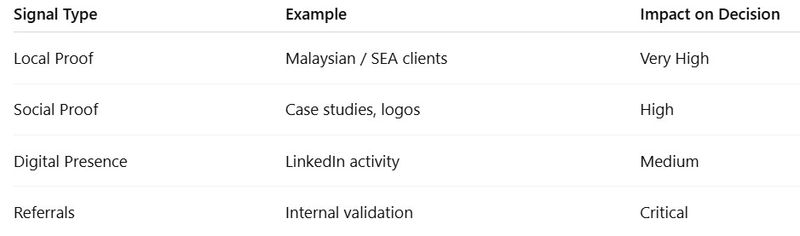
Table 1: Pre-Call Trust Signals in Malaysia
Explanation:
In B2B lead generation in Asia, trust is established indirectly.
- Regional relevance consistently outperforms global authority
- Familiar logos reduce perceived execution risk
- Internal referrals often outweigh external messaging
Key insight:
Your pipeline quality is shaped before your SDR speaks to the prospect.
Local Context Beats Global Positioning
A global brand does not automatically translate into trust in Malaysia.
Buyers prioritize:
- “Have you worked with companies like us?”
- “Is this relevant to our market?”
- “Can someone internally validate this?”
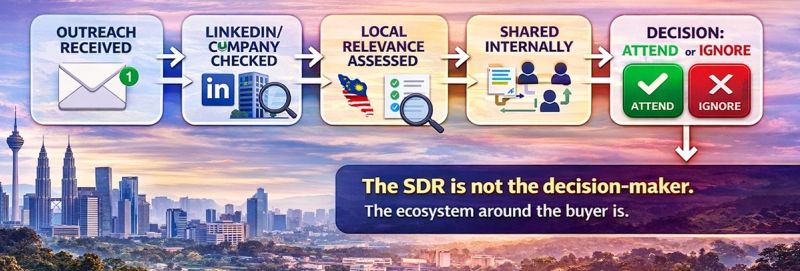
Malaysian Pre-Call Decision Flow: Malaysian B2B buyer decision flow before first call.
Flow:
- Outreach received
- LinkedIn/company checked
- Local relevance assessed
- Shared internally
- Decision: attend or ignore
Description:
The SDR is not the decision-maker.
The ecosystem around the buyer is.
Implication for APAC go-to-market strategies:
Without local context, even strong outbound campaigns lose momentum before meetings happen.
People Build Trust Faster Than Brands
One of the most consistent patterns across outsourced SDR services Singapore campaigns:
Buyers trust individuals more than companies.
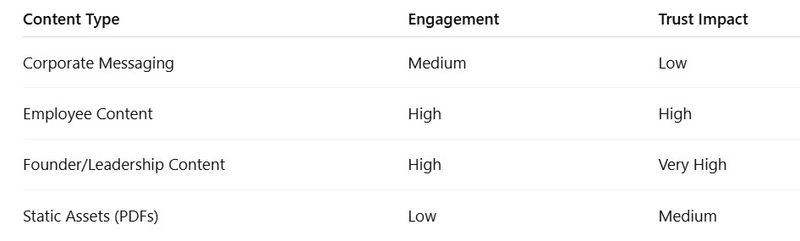
Table 2: Content Influence on Pre-Call Decisions
Explanation:
Human visibility creates credibility.
- SDRs with visible LinkedIn presence generate higher-quality replies
- Founder-led content accelerates trust formation
- Anonymous outreach reduces perceived legitimacy
For hybrid sales team AI and human models:
- AI creates reach
- Humans create trust
Relevance Is the Real Conversion Driver
Most SDR teams over-index on personalization.
Malaysian buyers respond to relevance.
Table 3: Why Most Outbound Fails
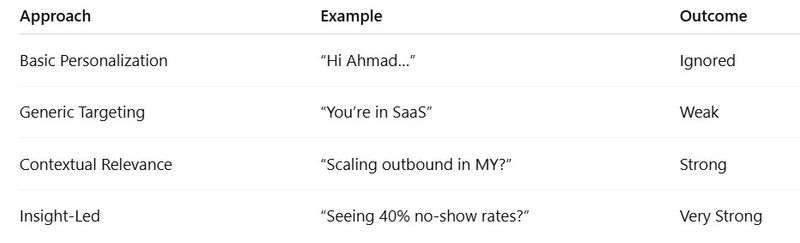
Explanation:
High-performing outbound lead generation strategies are built on:
- Market-specific insights
- Operational awareness
- Timing relevance
Generic messaging does not get rejected—it gets ignored.
Internal Alignment Happens Before the Meeting
In Malaysia, decisions are rarely individual.
They are validated internally before engagement.
Internal Alignment Before First Call: Malaysia B2B stakeholder validation before meeting.
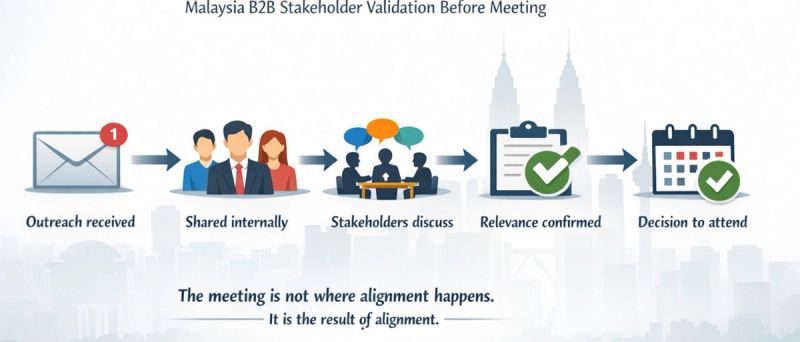
Flow:
- Outreach received
- Shared internally
- Stakeholders discuss
- Relevance confirmed
- Decision to attend
Description:
The meeting is not where alignment happens.
It is the result of alignment.
Across B2B sales expansion APAC projects, one pattern is clear:
Meetings without internal alignment rarely happen—or rarely matter.
Shareability Determines Pipeline Quality
The best-performing outreach gets forwarded internally.
This is a critical lever in sales pipeline building for B2B companies.
High-performing messages:
- Short
- Insight-driven
- Region-specific
Low-performing messages:
- Product-heavy
- Generic
- Early-stage pitching
Example:
Instead of:
“We help scale outbound sales”
Use:
“Most Malaysian pipelines lose 30–40% before the first call—are you seeing this?”
This works because it:
- Sparks discussion
- Gets shared internally
- Builds relevance instantly
Hybrid SDR Models Win Before the Call
Pure automation struggles in trust-driven markets.
Pure human outreach does not scale.
The solution is a hybrid SDR team model.

Structure:
- AI SDR
- Data enrichment
- Prospect identification
- Outreach scaling
- Human SDR
- Contextual messaging
- Trust building
- Relationship signaling
Industry benchmarks from McKinsey and Gartner show that hybrid sales models consistently outperform single-channel approaches in complex B2B environments.
For outsourced sales development for SMBs, this is now a baseline requirement.
Real Case Example (APAC SaaS Expansion)
Scenario:
SaaS company entering Malaysia with strong top-of-funnel metrics but weak meeting intent.
Key issue:
Meetings were being booked—but not internally validated.
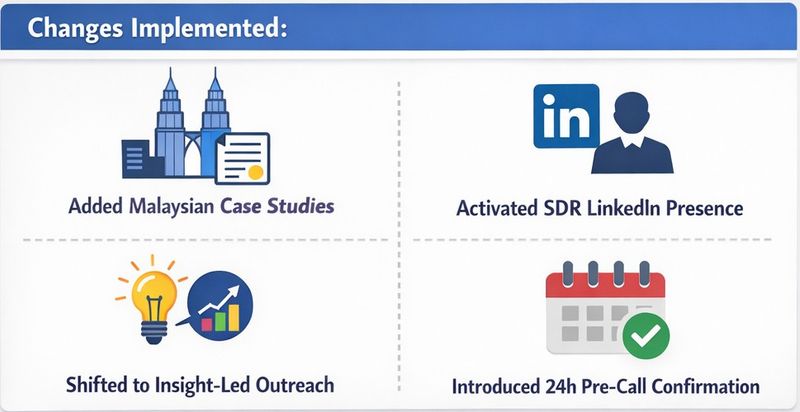
Changes implemented:
- Added Malaysian case studies
- Activated SDR LinkedIn presence
- Shifted to insight-led outreach
- Introduced 24h pre-call confirmation
Results (90 days):
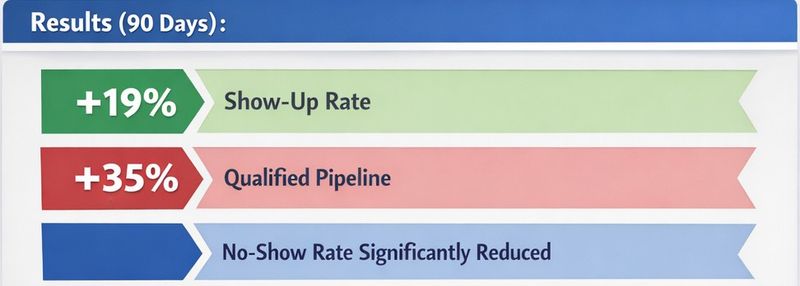
- Show-up rate: +19%
- Qualified pipeline: +35%
- No-show rate significantly reduced
Aligned with broader B2B lead generation strategies APAC benchmarks.
FAQ – Common Questions
Q1: Why do Malaysian B2B buyers decide before the first call?
A1: Because trust, relevance, and internal validation happen before engagement—not during it.
Q2: What matters most before a meeting?
A2: Local proof, contextual relevance, and internal shareability.
Q3: Is LinkedIn important in Malaysia?
A3: Yes. It acts as a primary credibility layer in B2B prospecting APAC markets.
Q4: How do I improve show-up rates?
A4: Focus on trust signals and stakeholder alignment before scheduling.
Q5: Do AI SDR tools work in Malaysia?
A5: Yes—but only when combined with human-led messaging.
Q6: What is the biggest outbound mistake?
A6: Treating booked meetings as qualified opportunities.
Q7: How many touchpoints are needed?
A7: Typically 3–5, with at least one insight-driven follow-up within 48 hours.
Key Takeaways
- Malaysian buyers decide before the call
- Trust is built through signals, not conversations
- Local relevance > global positioning
- Internal alignment determines meeting outcomes
- Hybrid SDR models outperform traditional setups
Related Articles
👉 Why Most B2B Deals in Malaysia See Early Pipeline Decay Before the First Call

If you are:
- Scaling with APAC go-to-market strategies for startups
- Using SDR outsourcing Singapore
- Trying to increase sales meetings with outsourced SDR
- Struggling with low meeting quality
You need to influence decisions before the meeting exists.
👉 Book a strategy session: HERE
👉 Explore services: HERE
Immediate action:
Review your last 20 meetings:
- % with local proof
- % with multiple stakeholders
- % with insight-led messaging
Final Insight
In Malaysia, pipeline quality is pre-call perception-driven, not activity-driven.
If trust, relevance, and internal alignment are missing before the meeting, the meeting will not move the deal forward.